

Clearing the blockage feels like a win until the toilet starts acting up again. A recurring clogged toilet often means something is still interfering with proper drainage. For instance, excess toilet paper, non-flushable items, or a partial obstruction can allow the problem to rebuild.
Meanwhile, a weak flush may leave waste behind rather than fully moving it through the trapway. Preventing another backup starts with finding the source rather than repeatedly reaching for the plunger. The following covers what to check, what to avoid, and when the problem may extend deeper into the drain.
1. Find What Keeps Causing the Clogged Toilet
A toilet that keeps clogging may have an issue that plunging alone cannot fix. Flushing habits, trapped material, or poor water flow can cause the blockage to return. Check the following common causes:
- Excess toilet paper: Large amounts can collect in the trapway, leading to another clogged toilet.
- Non-flushable materials: Wipes and hygiene products can become lodged inside the drain and restrict flow.
- Partial blockage: Slow bowl drainage may mean part of the obstruction remains in the trap or drain line.
- Reduced flushing force: A weak flush can leave waste behind, allowing material to build up.
Finding the cause of a recurring clogged toilet helps prevent the same blockage from returning.
2. Stop Flushing the Wrong Items
Many toilet clogs start with materials that do not break apart easily in water. Even small items can become trapped deeper in the plumbing. Keep the following materials out of the toilet:
- Disposable wipes: Put wipes in the trash because they can remain intact inside the drain.
- Paper towels: Avoid flushing thicker paper products since they break down slowly.
- Hygiene products: Keep sanitary products, cotton swabs, and similar items out of the bowl.
- Excess toilet paper: Use smaller amounts, especially when a weak flush struggles to move waste through the trap.
Better flushing habits reduce buildup and lower the risk of another clogged toilet.
3. Fix a Weak Flush Before It Causes Another Clog
A weak flush may not move waste and toilet paper completely through the trapway. As material collects, another blockage can develop. Watch for the following common causes:
- Low tank water: Too little water reduces the force available during each flush.
- Worn flapper: A damaged or poorly adjusted flapper may close before enough water leaves the tank.
- Blocked rim jets: Mineral deposits can restrict water entering the bowl and weaken the flush.
- Restricted siphon jet: Buildup can reduce the water force needed to clear the trapway.
Once you find the cause of the weak flush, focus on restoring proper water flow. Consider the following steps:
- Tank water adjustment: Set the water level to ensure a complete flush.
- Component repair: Replace or adjust worn parts that limit water release.
- Mineral buildup removal: Clear deposits from the rim and siphon jets.
- Flush testing: Make sure the bowl clears without slow drainage or rising water.
4. Keep the Toilet and Drain Flowing Properly
A developing blockage often changes how water moves before the toilet stops draining completely. Watch for these early warning signs:
- Rising bowl water: Water that climbs before draining can indicate restricted flow.
- Slow drainage: Delayed drainage may signal a partial obstruction collecting waste.
- Gurgling or bubbling: Unusual sounds may indicate trapped air due to a drain restriction.
- Multiple slow fixtures: A clogged toilet combined with slow sinks, tubs, or showers may indicate a blockage farther down the line.
Addressing these signs early can stop a partial obstruction from becoming a complete blockage.
5. Know When the Problem Goes Beyond the Toilet
A recurring clogged toilet may indicate a blockage deeper in the plumbing. When basic clearing methods do not solve the problem, look for the following indicators:
- Recurring clogs: A blockage that quickly returns may remain deeper inside the drain.
- Several slow drains: Slow toilets, sinks, tubs, or showers can indicate a shared drain restriction.
- Temporary plunging results: A brief improvement followed by another clog can indicate material farther down the line.
- Persistent weak flushing: A weak flush despite normal tank operation may indicate restricted drainage.
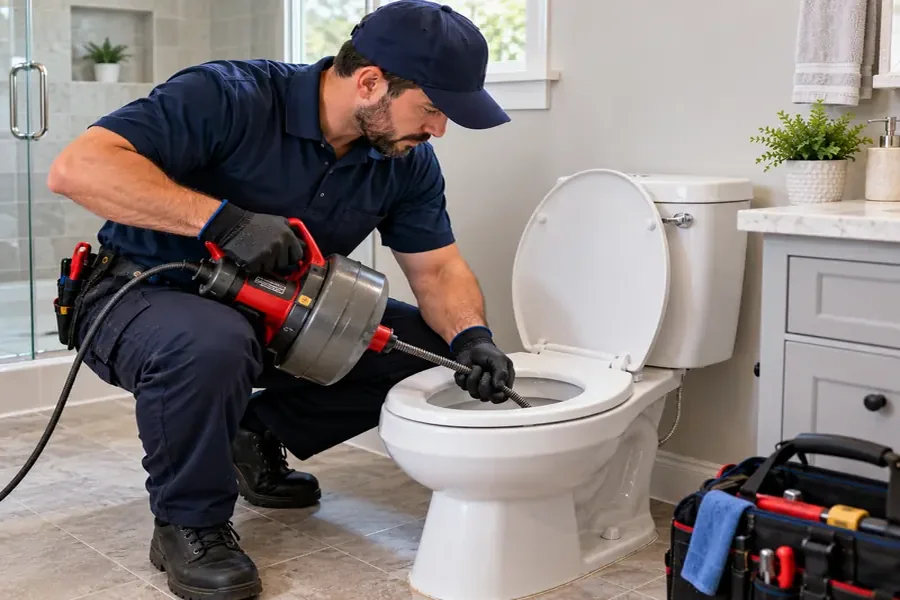
When these problems continue, plumbing professionals can inspect the system and locate the restriction. They usually use the following methods:
- Drain inspection: Determine whether the blockage is in the toilet, branch drain, or deeper line.
- Drain cleaning: Remove material that a standard plunger cannot reach.
- Drainage system check: Examine related slow drains and backups for signs of a larger obstruction.
Finding and clearing the deeper restriction can prevent another clogged toilet and unnecessary repairs.
Keep Every Flush Moving Forward
Getting the toilet flowing again is only half the job. Good clogged toilet prevention starts with better flushing habits, attention to drainage changes, and quick action when something feels off. A persistently weak flush or a recurring clogged toilet can indicate a problem that routine plunging will not fully resolve. Instead of waiting for another backup, address the cause before it disrupts your bathroom again. Schedule a professional plumbing inspection to identify the source and prevent the problem from recurring.
