

You can do everything right with veneers and still worry about one small detail that changes the whole look, especially when working with a dental clinic in South Calgary. The shape may be perfect, the fit may feel right, and then the shade test happens. Suddenly, you are staring at your smile under bright lights, trying to decide whether the veneer looks too gray, too bright, or just slightly off. That stress is real because the cement shade under a veneer can shift the final result in ways that are easy to miss until the restoration is bonded.
Transparent Vs. Opaque Dental Try In Pastes: Previewing A Veneer’s Cement Shade comes down to one issue. You are not only choosing a veneer. You are choosing how light will pass through it, how the underlying tooth color will show, and how the cement will affect the final appearance. Transparent try in pastes tend to let more of the underlying tooth and ceramic character show through. Opaque try in pastes can block or soften darker underlying color. The right choice depends on the thickness of the veneer, the shade of the prepared tooth, and the result you want from your family and cosmetic dentist.
Try In Pastes Change How a Veneer Shade Is Judged
A veneer is thin by design, which is why shade matching can get tricky fast. Thin ceramic does not hide everything underneath it. If the natural tooth is dark, stained, or uneven in color, that background can affect the final look after bonding. A more translucent ceramic may look beautiful on one tooth and slightly shadowed on another, even when the veneers themselves match.
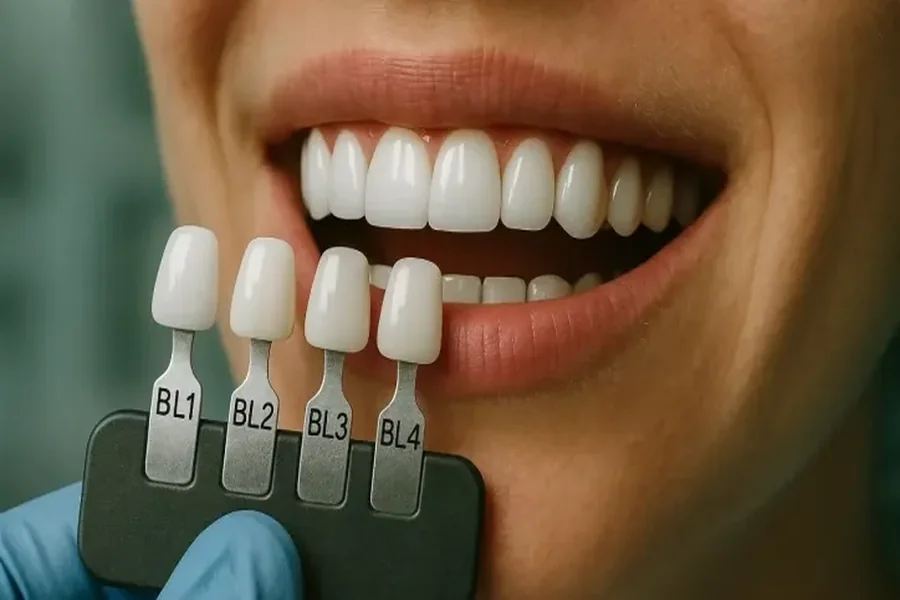
This is where try in pastes help. They give you and your dentist a preview of the final bonded look before the cement is set. That preview matters because resin cement is not just glue. It can influence brightness, warmth, and the way light moves through the veneer. Research on ceramic restorations and resin materials continues to show that translucency, thickness, and substrate color all affect final esthetics, which is why shade testing is not a cosmetic extra. It is part of good planning. You can read more in this review of optical behavior in dental restorative materials.
If you have ever looked at a veneer mockup and thought, “Why does this one tooth look flatter than the others,” you were probably noticing opacity and light transmission, not just color. That is the part many patients feel but cannot easily name.
Transparent and Opaque Try In Pastes Solve Different Veneer Cement Shade Problems
Transparent try in pastes are often used when the underlying tooth shade is already favorable and the goal is to preserve a natural, light passing effect. They work well when the veneer ceramic has enough body to create the desired shade without needing much masking from the cement. In many cases, this gives a more lifelike result.
Opaque try in pastes serve a different job. They help when the prepared tooth is dark, discolored, or inconsistent in shade. They can also help when a very thin veneer does not have enough thickness to block the background color on its own. That sounds simple, but there is a tradeoff. More opacity can improve masking, yet too much can reduce depth and make the restoration look less natural.
A study on color and translucency in restorative materials supports what dentists see every day in practice. Thickness and opacity affect how much the underlying tooth influences the final appearance. That means a paste that looks ideal on a sample tab may look different in your mouth. This published research on color stability and optical properties helps explain why those small differences matter.
Veneer try in paste comparison is not about picking the whitest option. It is about finding the cement shade that supports the veneer instead of fighting it.
Practical Differences Between Transparent and Opaque Veneer Try In Pastes
| Factor | Transparent Try In Paste | Opaque Try In Paste |
|---|---|---|
| Best use | When the tooth underneath has a favorable shade | When the tooth underneath is dark or uneven |
| Light transmission | Higher, more natural depth | Lower, more masking effect |
| Risk | Underlying discoloration may show through | Restoration may look flatter if overused |
| Common goal | Blend and preserve translucency | Hide darkness and improve uniformity |
| Works best with | Slightly thicker or naturally shaded veneers | Thin veneers over stained teeth |
Transparent vs opaque veneer paste decisions also depend on bonding conditions and the ceramic material itself. Some lithium disilicate and other esthetic ceramics are designed to balance strength with translucency, but the final effect still depends on what sits underneath them. This clinical review of ceramic restorations and esthetic outcomes shows why material selection and cement shade have to be considered together, not separately.
Small Shade Differences Can Become Big Regrets After Bonding
Once a veneer is bonded, changing the cement shade is not a quick fix. That is why the try in stage matters so much. A patient may ask for a bright smile and still dislike the result if one veneer reflects light differently from the next. Another may want a natural finish and end up with a restoration that looks too solid because the masking effect was pushed too far.
This is also where cost and emotion meet. Veneers are an investment, and most people are already carrying some fear into the appointment. They do not want to seem picky, but they also do not want to live with a smile that feels off every time they see a photo. A careful dental try in paste for veneers process lowers that risk.
Three Smart Steps Before You Approve the Veneer Shade
- Ask to see the veneer with more than one try in paste. If your tooth has any darkness or uneven color, ask to compare at least a transparent and a more opaque option. Side by side viewing often makes the decision clearer.
- Check the shade in different lighting. Operatory lights can wash out detail. Ask to see the veneer under natural light if possible, or at least under more than one lighting condition. A veneer that looks perfect in the chair can read differently in daylight.
- Focus on harmony, not just whiteness. Look at how the veneer blends with neighboring teeth, your skin tone, and the way light reflects across your smile. The best result usually looks balanced, not simply brighter.
A Careful Veneer Cement Shade Preview Protects the Final Result
You are not overthinking this. Cement shade can change the final look of a veneer, and try in pastes are the safest way to preview that result before bonding. Transparent pastes help preserve translucency. Opaque pastes help mask darker tooth structure. The right choice depends on your teeth, your veneer material, and the result you want.
If you are planning veneers, ask your family and cosmetic dentist to walk you through the try in process carefully and show you the difference before anything is bonded. That extra few minutes can protect the smile you are investing in.
