

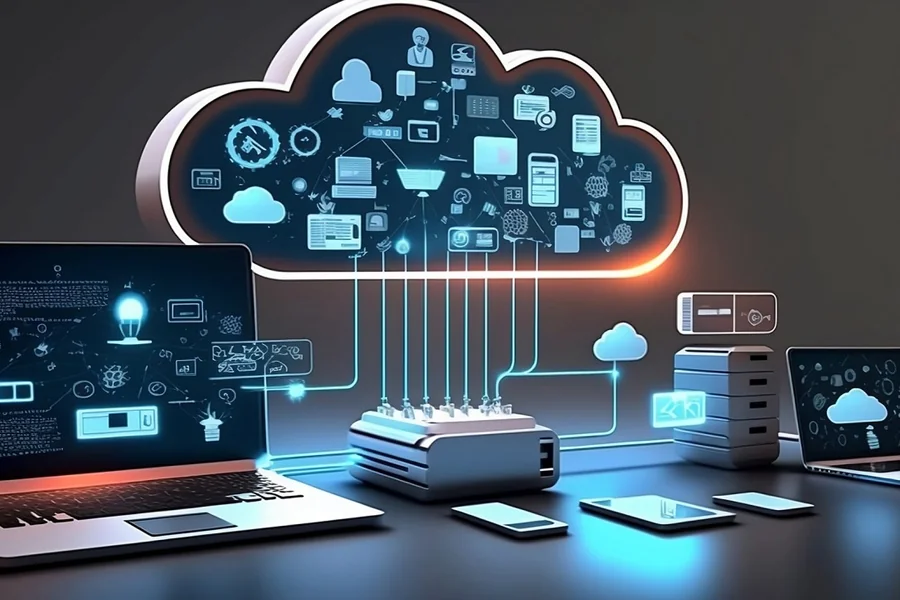
Humanity has always been defined by its innate ability to build tools and shape the environment. When we look back at the grand tapestry of human invention, we see a fascinating and relentless journey of progress that has completely transformed how we live, work, and communicate. From Cogs to Cloud: A Brief History of Technological Marvels is not just a timeline of gadgets and wires; it is the fundamental story of our unyielding drive to solve complex problems, connect with one another across vast distances, and push the boundaries of what is physically and virtually possible. What began as simple mechanical advantages has rapidly snowballed into an interconnected digital reality that our ancestors could scarcely have imagined. To understand where we are going in the digital age, we must first look back at the physical foundation upon which our modern world was built. This journey through time reveals how the raw, tangible machines of the past steadily paved the way for the invisible, omnipresent networks that define our current existence.
The Dawn of Mechanical Ingenuity
Long before electricity powered our homes or microchips processed our data, human beings relied on the sheer physical brilliance of mechanical engineering. The earliest technological marvels were born out of a need to automate labor, measure time, and understand the universe. One of the most astonishing early examples is the Antikythera mechanism, an ancient Greek hand-powered orrery described as the world’s oldest known analog computer. Built over two thousand years ago, this complex arrangement of bronze gears was used to predict astronomical positions and eclipses. It perfectly encapsulated the core principle of early technology: using physical cogs and gears to calculate and process information.
As centuries passed, the mastery of mechanical engineering only deepened. The Renaissance period brought about intricate clockwork mechanisms, shifting society’s reliance from the sun to precise mechanical timekeeping. This mastery of physical components eventually birthed the Industrial Revolution in the 18th and 19th centuries. Water wheels and steam engines replaced human and animal labor, leading to mass production and entirely new ways of living. During this era, visionaries like Charles Babbage conceptualized the Analytical Engine. Though never fully completed in his lifetime, Babbage’s design featured thousands of precisely machined cogs, gears, and levers intended to compute complex mathematical tables. Alongside Ada Lovelace, who realized that such a machine could process more than just numbers, they laid the philosophical groundwork for computing, proving that tangible, heavy machinery could execute logical operations.
The Spark of Electricity and Communication
The transition from purely mechanical systems to electrical ones marked a seismic shift in the trajectory of human innovation. For thousands of years, transferring information faster than a galloping horse or a speeding ship was simply impossible. That all changed in the 19th century when pioneers began to harness the strange, invisible force of electricity. The invention of the telegraph in the 1830s and 1840s by Samuel Morse and others was a watershed moment. For the first time in human history, messages could be sent almost instantaneously across vast distances using electrical impulses traveling through copper wires.
This foundational breakthrough opened the floodgates for a new era of connectivity. By the late 19th century, Alexander Graham Bell had patented the telephone, allowing actual human voices to travel across wires, forever shrinking the world. Concurrently, the legendary rivalry between Thomas Edison and Nikola Tesla over direct and alternating current laid the infrastructure for the modern power grid. Electricity shifted from a scientific curiosity to a vital public utility. The widespread adoption of the incandescent lightbulb transformed society, extending the working and waking hours well past sunset. As the 20th century dawned, electricity began to merge with mechanical systems, creating electromechanical machines that were faster, more reliable, and immensely more powerful than their purely physical predecessors. This era proved that manipulating invisible energy was the key to unlocking the next massive leap in technological evolution.
The Rise of Silicon and Computing
If the 19th century was about harnessing power and sending signals, the 20th century was about processing information. The earliest computers were behemoths of glass and wire. Machines like the ENIAC (Electronic Numerical Integrator and Computer), developed during World War II, relied on thousands of fragile, heat-generating vacuum tubes. While revolutionary, these machines took up entire rooms, consumed massive amounts of electricity, and were prone to constant mechanical failure. The turning point arrived in 1947 with the invention of the transistor at Bell Labs. By replacing bulky, hot vacuum tubes with tiny pieces of semiconductor material, engineers fundamentally changed the physical landscape of technology.
Transistors led to the development of the integrated circuit, or microchip, in the late 1950s. By etching complex electronic circuits onto a single piece of silicon, computing power began to multiply exponentially while physical size rapidly decreased. This phenomenon, famously described by Moore’s Law, dictated that the number of transistors on a microchip would double approximately every two years. This relentless miniaturization brought computers out of massive corporate basements and military facilities and directly into the home. The 1970s and 1980s saw the birth of the personal computer revolution, championed by upstart companies like Apple and Microsoft. Suddenly, the staggering computational power that once required a room full of machinery was sitting on a desktop, empowering ordinary individuals to write, design, calculate, and create in entirely new ways.
The Era of Cloud Computing and AI
As personal computers became ubiquitous, the next logical step was to connect them. What started as ARPANET, a localized network for military and academic research, blossomed into the World Wide Web in the 1990s. The internet completely democratized information, allowing anyone with a connection to access the collective knowledge of humanity. As bandwidth increased and wireless technology improved, the smartphone revolution of the late 2000s ensured that this infinite well of information was always in our pockets. However, the most profound shift of the 21st century has been the migration from local computing to cloud computing.
Instead of relying on the limited hard drive space and processing power of a single device, the “cloud” allows us to tap into massive global networks of remote servers. These sprawling server farms, housed in giant data centers around the world, handle our storage, run our applications, and process our streaming media in real time. This decentralized computing model has in turn paved the way for the explosion of Artificial Intelligence. Machine learning models require astronomical amounts of data and processing power to train—resources that only cloud architecture can provide. Today, AI helps us navigate traffic, diagnoses medical conditions, and even generates creative art. We have completely transitioned from heavy, localized machinery to an omnipresent, invisible network that silently powers our daily lives.
Final Thought
The trajectory of human progress is a testament to our enduring ingenuity and refusal to accept the limitations of our environment. Looking back at the heavy brass gears of early mechanical calculators, it is almost unfathomable that those same core logical principles now operate invisibly in the air around us, connecting billions of devices globally. We have moved from a world where technology was something you could touch, oil, and repair with a wrench, to a world where technology is an invisible layer of intelligence blanketing the globe. While the tools have changed dramatically, the core human desire remains exactly the same: to understand our world, to connect with one another, and to build a better future.
FAQs
What is the significance of the Antikythera mechanism? It is considered the world’s first analog computer and proves that advanced mechanical engineering and astronomical calculation existed thousands of years ago.
How did the transistor change the course of technology? It replaced fragile, large, and hot vacuum tubes, allowing electronic devices to become significantly smaller, faster, cheaper, and more reliable.
What exactly does the term cloud computing mean? It refers to the delivery of computing services, including storage, databases, and software, over the internet rather than on a local computer’s hard drive.
Why is Moore’s Law important in the history of computers? It became a guiding principle for the tech industry, driving the rapid, continuous miniaturization and exponential increase in computing power over several decades.
Will physical hardware ever be entirely replaced by the cloud? No, because the cloud still relies on massive amounts of physical hardware in the form of remote server farms, fiber optic cables, and data centers to function properly.
