

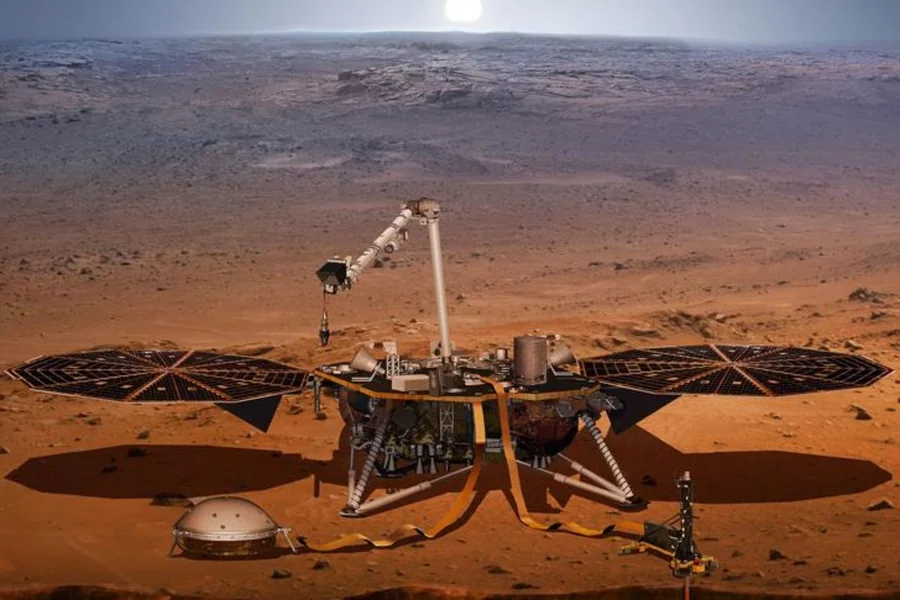
For decades, scientists and astronomers have gazed at the Red Planet with a mix of wonder and determination, hoping to unlock the secrets hidden beneath its dusty red exterior. Planetary researchers have sent numerous probes, orbiters, and robotic explorers to map the alien terrain and analyze the atmospheric conditions. However, a recent monumental breakthrough has completely changed the trajectory of human spaceflight and our long-term interplanetary ambitions. The news that a Mars Rover Discovers Subsurface Ice Formations, Boosting Hopes for Colonization has sent ripples of excitement throughout the global scientific community. This incredible find is not merely a scientific curiosity; it represents a fundamental shift in how we view our planetary neighbor and our potential future as a multi-planetary species. Finding accessible water is the single most critical factor in planning any long-term human presence in deep space. Without it, the logistical nightmare of transporting millions of gallons of water from Earth would render permanent settlements financially and scientifically impossible. Now, with confirmed underground frozen reservoirs, the dream of seeing astronauts walking, living, and thriving on another world is closer to reality than ever before. Scientists are already busy analyzing the vast amounts of telemetry and radar data sent back to Earth to understand the exact composition, depth, and volume of these frozen lakes. This discovery validates years of theoretical models suggesting that the planet once had abundant liquid water flowing across its surface, carving the ancient riverbeds and massive canyons we see today. As the environment slowly lost its atmosphere over billions of years, the remaining moisture retreated underground, shielded from the harsh radiation and freezing temperatures of the surface.
The Strategic Importance of Martian Water Resources
Water is the undisputed foundation of all known biological life, but in the context of space exploration, its value extends far beyond basic hydration. When mission planners discuss the logistics of establishing a permanent off-world base, the most punishing limitation they face is mass. Launching heavy payloads out of Earth’s gravity well is astronomically expensive, costing thousands of dollars for every single pound of cargo. If future colonists were forced to rely on regular supply ships delivering fresh water from Earth, the colonization effort would quickly collapse under its own weight and expense. The detection of localized frozen reserves eliminates this prohibitive bottleneck, offering a massive strategic advantage for future architects and engineers. Access to localized resources completely transforms the blueprint for human settlement on the planet. Beyond providing drinking water for the crew, these frozen deposits can be heavily processed and utilized for a multitude of life-sustaining applications. For instance, water acts as an exceptional radiation shield. By constructing habitats with double-layered walls filled with liquid water, colonists can be protected from the deadly solar flares and cosmic rays that bombard the planetary surface. Furthermore, water is vital for sustaining any large-scale agricultural efforts. Growing food inside pressurized greenhouses will require advanced hydroponic and aeroponic systems that constantly cycle nutrient-rich water to plant roots. Without a massive local reservoir to draw from, sustaining the crop yields necessary to feed a growing population of scientists and explorers would be impossible. The strategic importance of this frozen bounty cannot be overstated; it is the literal lifeblood of any future permanent settlement and the key to true autonomy from our home planet.
Advanced Technology Behind the Find
Detecting structures buried deep beneath an alien surface requires an incredibly sophisticated suite of scientific instruments and unparalleled engineering ingenuity. The robotic explorer responsible for this historic breakthrough was equipped with state-of-the-art ground-penetrating radar systems designed specifically to peer through the dense, rocky regolith. Unlike optical cameras that merely capture surface images, this advanced radar emits targeted radio waves that penetrate the topsoil and bounce back when they hit materials of varying densities and dielectric properties. By meticulously measuring the time it takes for these echoes to return, scientists can map the underground geology in high-resolution three-dimensional models. When the rover rolled over specific geological depressions, the returning signals clearly indicated a massive layer of high-density material that perfectly matched the signature of frozen water. This wasn’t a sudden, accidental finding; it was the result of years of meticulous pathfinding, targeted drilling, and continuous data collection across highly prioritized scientific zones. Alongside the radar, the rover utilized specialized spectrometers to analyze the chemical composition of the topsoil, confirming the presence of hydrogen-rich minerals that often form in the presence of moisture. Furthermore, the robotic arm carried miniature core-drilling mechanisms capable of extracting pristine samples from beneath the irradiated surface layer. By analyzing these tiny rock cores in its onboard laboratory, the rover provided undeniable chemical proof that the subsurface environment remains incredibly rich in water-bearing compounds. The sheer technological marvel of operating a mobile laboratory millions of miles away from Earth, entirely through pre-programmed commands and delayed signal transmissions, stands as a testament to the brilliance of the engineering teams involved.
Sustaining Life Through In-Situ Resource Utilization
The aerospace concept of In-Situ Resource Utilization, commonly referred to as ISRU, is the ultimate game-changer for long-duration deep space missions. ISRU is essentially the practice of living off the land, harvesting local raw materials to manufacture the consumables and propellants needed for survival and return journeys. With the confirmation of vast underground frozen lakes, ISRU transitions from a theoretical concept into a practical, operational strategy. The most crucial application of ISRU involves the production of rocket propellant. Through a chemical process known as electrolysis, colonists can use solar or nuclear power to split the harvested water into its base elements: hydrogen and oxygen. The oxygen can be cryogenically stored for the life support systems, ensuring a continuous supply of breathable air for the habitat. The hydrogen, meanwhile, can be combined with carbon dioxide drawn directly from the thin Martian atmosphere using a Sabatier reactor to produce liquid methane. Methane and liquid oxygen form a highly efficient rocket fuel known as methalox, which powers many next-generation spacecraft currently being developed for interplanetary travel. By manufacturing their own fuel on site, future missions can launch from Earth with empty return tanks, drastically reducing the initial launch weight and making the entire mission architecture significantly cheaper and more efficient. Additionally, ISRU techniques will be heavily utilized in construction. The water can be mixed with the native regolith to create a form of durable concrete, allowing autonomous robots to 3D-print blast shields, landing pads, and reinforced habitat structures long before the first human crew ever arrives.
Overcoming Challenges in Deep Space
While the location of these underground reserves is a monumental victory, actually extracting and utilizing the resource presents a formidable set of engineering and environmental challenges. The planetary surface is one of the most hostile environments in our solar system. The average temperature hovers around minus eighty degrees Fahrenheit, and massive global dust storms can blanket the entire planet for months, completely blocking out the sun and rendering solar panels useless. Because the water is permanently frozen in a state of permafrost mixed with dense rock, extracting it will require heavy-duty thermal drills capable of melting the ice and pumping the liquid to the surface without it immediately boiling away in the low-pressure atmosphere. Furthermore, the native soil is heavily contaminated with toxic chemicals known as perchlorates. These reactive salts are highly hazardous to human health, meaning the extracted water cannot be consumed or used for farming immediately. It will have to undergo rigorous, multi-stage purification processes, including reverse osmosis and chemical neutralization, to ensure it is completely safe for biological use. The sheer mechanical reliability required for this equipment is staggering. If a water purification pump breaks down on Earth, a replacement part can be ordered and delivered the next day. If a critical component fails on another planet, the colonists will have to rely on their own ingenuity, 3D printing replacement parts from recycled plastics or metals. The psychological toll of living in such extreme isolation, coupled with the constant life-or-death reliance on mechanical life support systems, will require future astronauts to possess an unprecedented level of mental resilience and technical cross-training.
Preparing for Human Settlement
As the reality of an interplanetary future comes into sharper focus, space agencies and private aerospace corporations are accelerating their timelines for human settlement. The discovery of these critical frozen resources serves as a massive catalyst, greenlighting billions of dollars in funding for the development of the next generation of super-heavy lift launch vehicles and specialized habitat modules. Engineers are currently prototyping automated extraction factories that will be sent ahead of the human crews to establish a functional resource stockpile. These robotic precursors will land near the newly discovered ice formations, deploy their drills, and spend several years quietly producing and storing liquid oxygen, drinking water, and rocket fuel. By the time the first brave explorers touch down on the dusty red surface, they will be greeted by a fully stocked, automated oasis. The architectural designs for these initial base camps are heavily inspired by submarine technology and Antarctic research stations, emphasizing closed-loop environmental controls where absolutely nothing is wasted. Every drop of sweat, exhaled moisture, and wastewater will be relentlessly captured, filtered, and recycled back into the system. The transition from exploration to sustained habitation will occur in distinct phases, beginning with short-term scientific outposts and gradually expanding into permanent, self-sustaining towns. Greenhouses will be established, expanding the footprint of the base and providing a vital psychological boost by surrounding the crew with lush, green plant life in an otherwise barren wasteland. This long-term vision requires unprecedented international cooperation, blending the expertise of global space agencies with the rapid innovation of the commercial space sector.
FAQs
What is the exact depth of the newly found frozen water? The radar data indicates that the massive frozen reserves are located just a few meters beneath the top layer of rocky regolith. Can astronauts drink the water found on the Red Planet? It will require extensive filtration and purification to remove toxic perchlorates and heavy metals before it is safe for human consumption. Will this frozen water be used to manufacture rocket fuel? Yes, through a process of electrolysis, the water can be split into hydrogen and oxygen to create liquid propellants for return journeys. How did the rover detect these underground anomalies? The robotic explorer utilized advanced ground-penetrating radar systems designed to send radio waves deep into the soil and measure the returning echoes. When will the first human crews arrive to utilize these resources? Current projections suggest that crewed missions could launch within the next decade, utilizing these localized resources to establish preliminary base camps.
Final Thought
The confirmation of abundant, accessible subsurface water fundamentally alters the destiny of human spaceflight. We are no longer merely observers sending robotic emissaries to take photographs of a dead, barren world; we are prospective pioneers looking at a dormant landscape with the genuine potential to sustain human life. The incredible technical achievements that led to this monumental find demonstrate the absolute pinnacle of human curiosity, engineering, and perseverance. As we refine our extraction technologies and finalize the designs for our deep-space transport vehicles, the dream of becoming a multi-planetary species transitions from the realm of science fiction into a tangible, actionable roadmap. The challenges ahead are undeniably immense, requiring a unified global effort and astronomical financial investments, but the ultimate reward is nothing less than the long-term survival and expansion of human civilization. We are standing on the precipice of a new era of exploration, looking toward a future where looking up at the night sky means looking out at our new home.
