

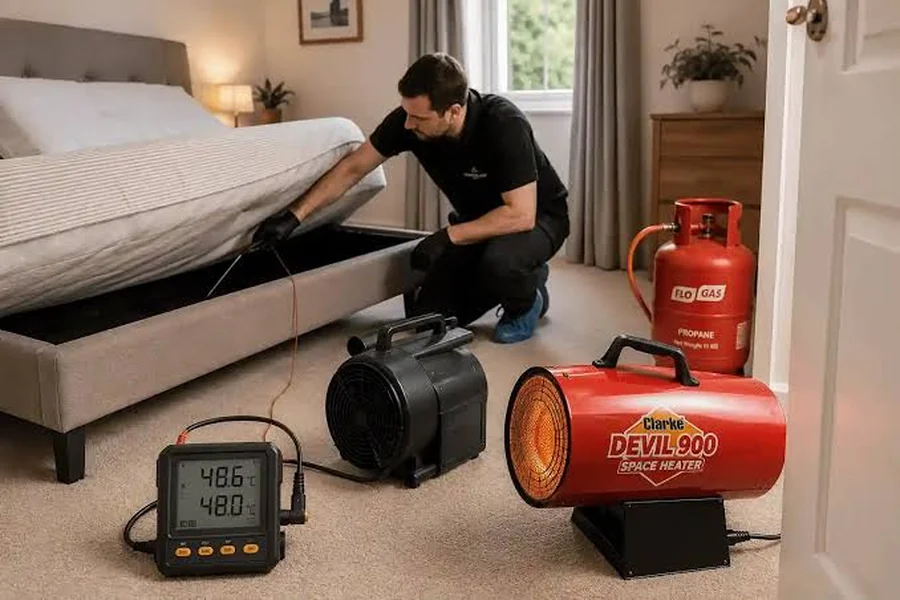
When bed bugs disappear into mattress seams, furniture joints, and tiny crevices, finding each insect individually is nearly impossible. Professional heat takes a different approach: the treatment area is heated so lethal temperatures can reach bugs concealed from view. But effective bed bug heat treatment involves much more than simply making a house hot. From preparation and temperature monitoring to post-treatment prevention, what should homeowners expect when professionals use heat to control an infestation?
How Bed Bug Heat Treatment Works
Professional bed bug heat treatment raises temperatures throughout designated treatment areas and maintains lethal conditions long enough to affect hidden bed bugs. Effectiveness depends on temperature, exposure time, penetration, airflow, and careful monitoring.
How bed bug heat treatment raises temperatures throughout the treatment area
Specialized heating equipment introduces and circulates heated air through the treatment space. The goal is not merely to reach a particular room-air temperature but to ensure sufficient heat reaches the places where bed bugs and eggs may be concealed.
The U.S. Environmental Protection Agency notes that infested articles, rooms, apartments, and entire houses can be treated with heat. Appropriate temperatures must be sustained for enough time to affect the targeted life stages.
Why controlled temperatures can reach hidden bed bugs
Mattresses, upholstered furniture, and household belongings can insulate the insects hiding inside them. Consequently, these locations may heat more slowly than the surrounding room.
The University of Minnesota Extension explains that thermal treatments must achieve critical temperatures inside infested items. Proper airflow and monitoring help technicians determine whether those harder-to-heat locations have reached the required conditions.
Preparing for Heat Treatment for Bed Bugs
Preparation helps professionals heat the property safely and consistently. Homeowners should follow their treatment company’s specific preparation checklist because requirements can vary by equipment, property, and treatment plan.
What homeowners should remove before heat treatment for bed bugs
Certain belongings may be damaged by elevated temperatures or require special handling. Depending on the provider’s instructions, these can include:
- Pressurized aerosol containers
- Flammable or combustible products
- Heat-sensitive medications
- Wax and other meltable materials
- Certain electronics and delicate belongings
- Plants, pets, and aquariums
Do not decide independently to remove large quantities of belongings from an infested room. Moving untreated items elsewhere can potentially transport bed bugs with them.
Why proper preparation helps heat treatment for bed bugs work effectively
Crowded or densely packed belongings can slow heat penetration and interfere with air circulation. Preparation gives technicians access to the treatment area and helps heat move around furnishings and other contents.
The EPA also recommends containing potentially infested items when they must be moved and avoiding unnecessary transfer of belongings from infested areas into unaffected spaces.
What Happens During Professional Bed Bug Treatment
During professional bed bug treatment with heat, technicians use specialized equipment to raise and monitor temperatures throughout the designated area. The process is controlled rather than simply heating the property as quickly as possible.
How technicians monitor temperatures during professional bed bug treatment
Professionals can place temperature sensors in multiple locations, particularly where materials may insulate hidden insects. The University of Minnesota Extension recommends proper temperature-monitoring equipment and notes that sensors can be positioned within infested articles to verify that critical temperatures have been reached.
This is an important distinction: a hot room does not automatically mean the center of a mattress, furniture item, or other protected location has reached lethal conditions.
Why bed bug heat treatment requires specialized equipment
Turning up a thermostat or using ordinary space heaters is not an appropriate substitute for professional heat treatment. The EPA warns that successful heat treatment requires specialized equipment and temperatures high enough to ensure sustained heat reaches bed bugs wherever they are hiding.
Improvised whole-room heating with space heaters, fireplaces, or similar equipment can also create serious fire and safety hazards.
When heat is appropriate for the property, professional bed bug heat treatment provides a controlled approach designed to deliver and monitor heat throughout designated treatment areas.
What to Expect After Bed Bug Heat Treatment
Once treatment is complete, the provider should explain when residents can safely return and what should happen next. Heat can kill eggs, nymphs, and adults when lethal temperatures are achieved and maintained throughout the required areas, but it does not provide ongoing residual protection.
Returning home after professional bed bug treatment
Do not re-enter the property until the treatment company gives clearance. The home and its contents may remain warm after service, and specific items may require time to cool.
Follow the provider’s instructions before cleaning, reorganizing belongings, or returning removed items. If possessions were excluded from treatment because they were heat-sensitive, they may require inspection or another appropriate control method before being returned to treated spaces.
Monitoring and prevention practices following treatment
Continue checking mattresses, bed frames, headboards, and nearby furniture for physical evidence of activity. Interceptor devices may also help monitor for bed bugs when used appropriately.
Heat treatment has no residual effect, meaning it cannot prevent a bed bug introduced later from establishing another infestation. Inspecting secondhand furniture, checking luggage after travel, and reducing clutter around sleeping areas remain useful prevention practices.
If suspicious activity appears after treatment, document the evidence and contact the pest professional rather than assuming treatment automatically failed. A follow-up inspection can determine whether additional control measures are appropriate.
Professional Monitoring Makes Heat Treatment Effective
Effective heat treatment for bed bugs depends on what happens in the insects’ hiding places, not simply the temperature someone feels when walking into the room. Heat must penetrate protected areas and remain at lethal conditions for the required exposure period.
That is why professional preparation, specialized equipment, controlled airflow, and temperature monitoring are central to the process. When performed correctly, heat can target multiple bed bug life stages throughout the treated area while giving homeowners a structured approach to an otherwise difficult-to-reach infestation.
