

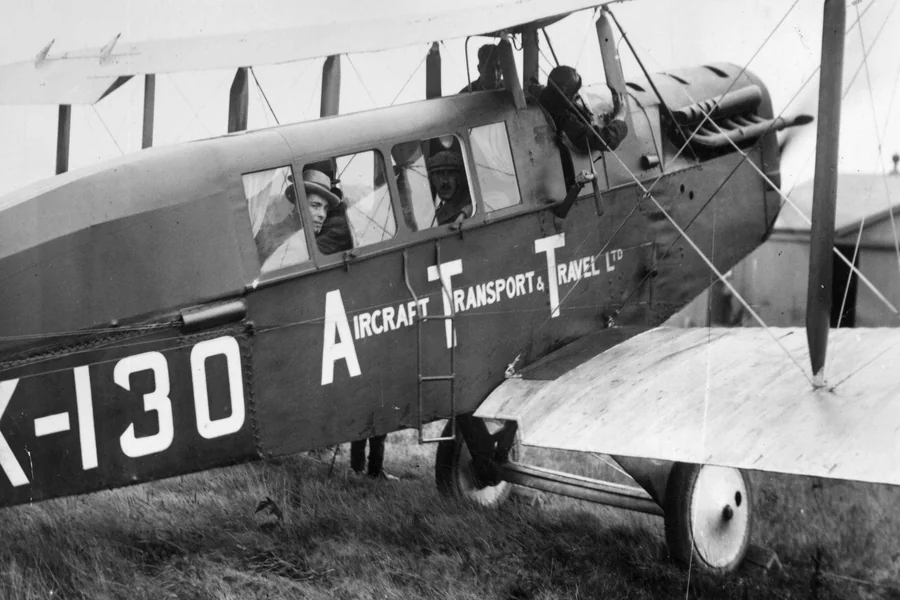
The aviation industry has witnessed many milestones since the Wright brothers first took to the skies, but none quite as transformative as the events that unfolded this week at Heathrow Airport. The First Fully Autonomous Commercial Passenger Flight Successfully Lands in London, cementing a new chapter in modern transportation and fundamentally changing how we think about air travel. For decades, experts have debated the feasibility of removing human pilots from the cockpit of large passenger airliners. Now, that theoretical debate has been replaced by concrete reality. A fully automated jet, carrying a full manifest of paying customers, navigated across the Atlantic Ocean and touched down smoothly on the British runway without a single manual input from a human pilot. This monumental achievement represents the culmination of years of rigorous research, relentless testing, and unprecedented collaboration between aerospace engineers, artificial intelligence developers, and international aviation regulators. Passengers on board reported a journey that felt entirely normal, characterized by gentle banking, smooth altitude adjustments, and a textbook landing that rivaled the skills of the most seasoned human captains. As the world processes the magnitude of this technological breakthrough, it is clear that the skies will never be the same. The successful completion of this journey opens up endless possibilities for the future of commercial transit, promising greater efficiency, enhanced safety protocols, and a potential solution to the ongoing global pilot shortage that has plagued major airlines for years.
The Dawn of Pilotless Aviation
For the last several decades, commercial aircraft have heavily relied on advanced autopilot systems to manage the bulk of long-haul flights. However, human pilots have always remained in the cockpit to handle takeoffs, landings, and unforeseen emergencies. The transition from heavily assisted flying to complete autonomy required a monumental leap in artificial intelligence and machine learning capabilities. Engineers had to design systems that could not only follow a pre-programmed flight path but also react dynamically to unpredictable variables such as sudden weather shifts, air traffic congestion, and mechanical anomalies. The journey to this historic London landing began in closed testing environments, eventually progressing to uncrewed cargo flights that traversed desolate routes to prove the technology’s reliability. As these cargo flights racked up thousands of incident-free hours, aviation authorities slowly began to recognize the viability of applying this technology to passenger travel. The psychological barrier was perhaps the most significant hurdle, as convincing the public to board an aircraft with an empty cockpit required immense transparency and flawless safety records. By gradually introducing AI-assisted features and continuously proving their superiority in reaction times and precision, the industry slowly built the necessary public trust. This week’s successful flight is the ultimate vindication of that gradual, methodical approach, proving that machines can handle the immense responsibility of human lives at thirty-five thousand feet.
How the Technology Works Behind the Scenes
At the heart of this autonomous aircraft is a complex neural network of sensors, cameras, radar, and lidar systems that feed terabytes of real-time data into an onboard supercomputer. Unlike a human pilot who relies on two eyes and a finite amount of cognitive processing power, the autonomous flight system possesses complete, 360-degree situational awareness. It constantly communicates with global positioning satellites, ground-based radar arrays, and meteorological databases to construct a highly detailed, multi-dimensional map of its environment. If a storm cell develops rapidly along the flight path, the artificial intelligence can calculate millions of potential rerouting options in a fraction of a second, selecting the one that offers the least turbulence and optimal fuel efficiency. Furthermore, the aircraft is equipped with triple-redundant backup systems. In the highly unlikely event that the primary computer fails, a secondary and then a tertiary system are ready to take immediate control, ensuring there is never a lapse in command. While there is no human pilot in the physical cockpit, the flight is heavily monitored by highly trained ground operators stationed in a centralized control hub. These operators function similarly to air traffic controllers but have the ability to intervene and take remote control of the aircraft if a catastrophic system failure were to occur. This “human-in-the-loop” safeguard provides an essential layer of security, marrying the flawless execution of machine intelligence with the nuanced judgment of human experience.
Safety Measures and Regulatory Approvals
Achieving certification for a fully autonomous passenger flight was an agonizingly strict process that involved multiple international regulatory bodies, including the Civil Aviation Authority in the United Kingdom and the Federal Aviation Administration in the United States. Regulators demanded that the autonomous systems demonstrate a safety record significantly higher than that of human pilots before even considering approval for a passenger route. To meet these stringent demands, the developers subjected the artificial intelligence to millions of hours of simulated flights in extreme, edge-case scenarios. The system had to prove it could successfully land the plane in hurricane-force crosswinds, handle dual-engine flameouts, and navigate safely through dense volcanic ash clouds. Only after the software consistently outperformed human benchmarks in these stress tests did regulators grant experimental passenger certification. The aircraft itself underwent structural modifications to accommodate the new technology, including the installation of tamper-proof, reinforced computing bays to protect the “digital pilot” from both physical damage and sophisticated cyber-attacks. Advanced encryption protocols secure the data link between the aircraft and ground control, neutralizing the threat of remote hijacking. The successful landing in London proves that these exhaustive safety measures are not just theoretical concepts, but highly effective operational realities that protect passengers from boarding to disembarkation.
What This Means for the Future of Travel
The implications of autonomous commercial flights extend far beyond the marvel of modern engineering; they are poised to trigger a massive economic restructuring of the global travel industry. One of the most immediate benefits is the potential alleviation of the pilot shortage, a crisis that has forced airlines to cancel thousands of flights and abandon numerous regional routes over the past decade. With autonomous aircraft, airlines can maintain aggressive expansion schedules without being bottlenecked by the availability of trained flight crews. This operational efficiency is expected to translate into reduced overhead costs, which could eventually be passed down to consumers in the form of cheaper airline tickets. Furthermore, automated flight systems are incredibly precise in their throttle management and route optimization, leading to significant reductions in aviation fuel consumption. This precision directly translates to a lower carbon footprint, aligning the aviation sector more closely with global environmental sustainability goals. Passengers might also see a shift in cabin design; without the need for a traditional cockpit, aircraft manufacturers could reimagine the nose of the plane, potentially introducing new panoramic seating arrangements or expanded lounge areas. While the transition to fully autonomous fleets will likely take decades, this inaugural flight to London serves as the critical catalyst, proving that the technology is viable, safe, and ready for commercial integration.
FAQs
What is an autonomous commercial passenger flight? An autonomous commercial passenger flight is a journey operated entirely by artificial intelligence and advanced computer systems without any human pilots physically present in the cockpit controlling the aircraft.
Are there human operators monitoring the flight? Yes, highly trained ground operators continuously monitor the flight from a centralized control center and can remotely intervene if an unprecedented emergency arises.
How does the aircraft handle severe weather conditions? The onboard computers process real-time meteorological data and satellite feeds to instantly calculate the safest and smoothest alternative routes, reacting much faster than a human pilot could.
Is flying on an autonomous plane safe? Extensive testing and regulatory scrutiny have demonstrated that these autonomous systems possess safety records and reaction times that significantly exceed those of traditional human flight crews.
Will autonomous flights make airplane tickets cheaper? By reducing operational costs related to crew salaries, hotel accommodations, and fuel consumption through optimized flying, airlines are expected to lower ticket prices over time.
Final Thought
The moment the wheels of the autonomous aircraft touched the tarmac in London, a new era in human mobility was officially born. Embracing this pilotless technology requires a collective shift in public perception, but the overwhelming success of this inaugural journey provides a powerful foundation of trust. As regulatory frameworks continue to evolve and artificial intelligence systems become even more sophisticated, autonomous flights will transition from being a headline-making novelty to the standard mode of global transit. We are standing on the precipice of an aviation revolution, one that promises to make flying safer, greener, and more accessible for generations to come.
