

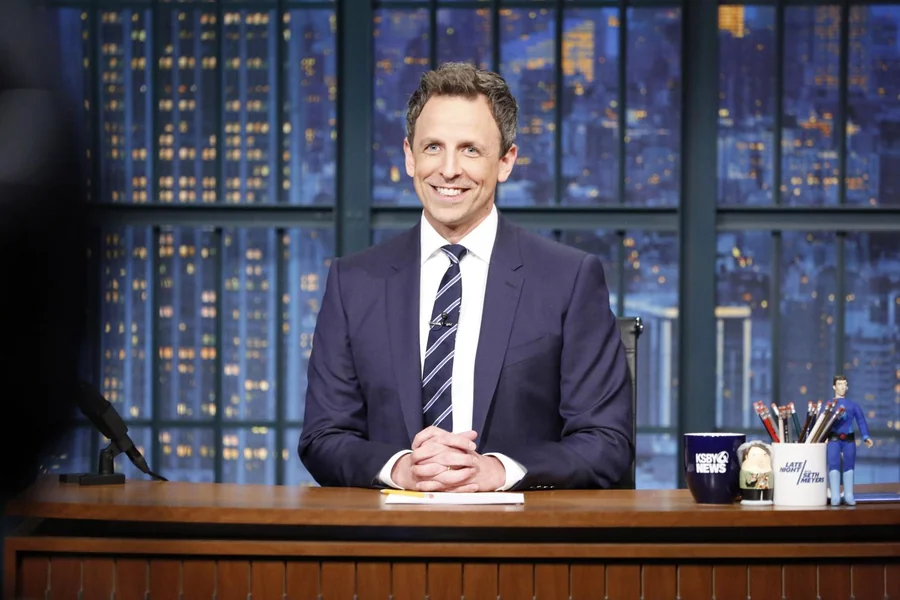
For decades, the end of the television broadcasting day was marked by a familiar rhythm. A charismatic host would step through a curtain, stand on a mark, and deliver a string of topical jokes to a live studio audience. But today, that familiar format has transformed into something much more profound. The Late-Night Monologue: Satire in the Age of Modern Media is no longer just a lighthearted way to end the evening. It has evolved into a powerful mechanism for processing the day’s news, holding public figures accountable, and shaping the cultural zeitgeist. As traditional journalism faces unprecedented challenges with public trust and audience retention, comedians have unexpectedly stepped in to fill the void. By blending rigorous fact-checking with biting humor, these hosts have turned the traditional comedic opening into an essential pillar of contemporary political discourse. Understanding how this shift occurred requires looking at where the format began, how it adapted to shifting cultural tides, and why a well-crafted punchline often resonates more deeply than a standard news report.
The Evolution of Late-Night Television
To appreciate the current landscape of late-night comedy, one must look back at its origins. The classic monologue was defined by legends like Johnny Carson, who understood his role as a unifying presence in American living rooms. During Carson’s era, the goal was broad appeal. The country was divided on many issues, but the late-night host was supposed to be a neutral arbiter of comedy. Jokes were made at the expense of politicians on both sides of the aisle, but the tone was largely gentle. The objective was never to alienate a viewer or take a definitive moral stance. Instead, the monologue served as a communal unwinding process, a shared cultural experience that signaled it was time to go to sleep.
This template persisted for a long time. Jay Leno and David Letterman carried the torch through the late twentieth century. Leno leaned heavily into accessible, middle-America humor, meticulously testing his jokes to ensure they offended as few people as possible. Letterman brought a more cynical, subversive, and absurd edge to the format, but his rebellion was mostly against the conventions of television itself rather than the political establishment. During this period, the monologue was still fundamentally about entertainment. If news was discussed, it was usually a setup for a punchline about a politician’s superficial traits—a funny haircut, a clumsy moment, or a well-known personal quirk. The host was an observer of the world, floating above the fray rather than fighting in the trenches.
However, as the twenty-first century approached, the cultural climate began to shift. The advent of the 24-hour cable news cycle created a sense of overwhelming information fatigue. Viewers were bombarded with sensationalized headlines and partisan shouting matches. In this chaotic environment, the polite, middle-of-the-road jokes of traditional late-night television began to feel inadequate. The audience was growing more cynical and more fragmented, and they started looking for a voice that could cut through the noise and point out the absurdity of the media landscape itself.
Shifting from Broad Comedy to Sharp Political Satire
The true turning point for the modern monologue came not from a traditional broadcast network, but from a basic cable comedy show. When Jon Stewart took over The Daily Show in 1999, he fundamentally altered the DNA of late-night television. Stewart abandoned the pretense of the neutral host. Instead, he positioned himself as a frustrated citizen, bewildered by the hypocrisy of politicians and the incompetence of the news media. His monologues were less a string of disconnected jokes and more cohesive, persuasive essays that used humor as a weapon of critique.
This approach gave birth to a new era of comedic commentary. Stephen Colbert expanded on this by adopting a brilliant satirical persona on The Colbert Report, demonstrating that audiences were intelligent enough to understand layered, ironic humor that skewered talking-head pundits. The success of these shows proved that viewers were hungry for a point of view. They did not just want to laugh; they wanted to feel validated in their frustrations about the state of the world.
As Stewart and Colbert’s acolytes—including John Oliver, Samantha Bee, and Trevor Noah—graduated to their own programs, this satirical framework became the industry standard. Even the traditional network shows were forced to adapt. When Stephen Colbert took over The Late Show, he eventually dropped the middle-of-the-road approach and leaned entirely into political commentary. Seth Meyers reinvented the Late Night franchise with “A Closer Look,” a long-form, meticulously researched desk piece that functions as deep-dive journalism with punchlines. Jimmy Kimmel, once known primarily for frat-boy humor, transformed into an earnest, politically engaged host who frequently uses his opening minutes to deliver passionate, tearful pleas about healthcare, gun control, and democracy. The curtain and the microphone are still there, but the intent behind the words has shifted entirely from gentle ribbing to urgent advocacy.
The Impact of the Internet and Social Media
No discussion of this subject is complete without examining the role of technology. The internet completely dismantled the traditional viewing habits associated with late-night television. Today, a significant portion of the audience does not actually stay awake until midnight to watch these shows live. Instead, they consume the content the next morning on YouTube, Facebook, Twitter, and TikTok.
This shift to on-demand digital consumption fundamentally changed how monologues are written and structured. Writers no longer craft a show solely for the live studio audience; they are writing for the internet algorithm. A successful monologue needs to be highly shareable. It requires a compelling thumbnail, a click-worthy headline, and a tight narrative structure that holds a digital viewer’s attention for ten to fifteen minutes. The slow, meandering joke-telling pace of the Carson era simply does not survive in a scroll-heavy social media environment.
Furthermore, social media allows these satirical pieces to escape the vacuum of entertainment and enter the actual news cycle. When John Oliver spends twenty minutes dismantling a complex issue like net neutrality or municipal violations, the resulting viral video can lead to real-world policy changes—a phenomenon often dubbed “The John Oliver Effect.” When a host delivers a particularly biting critique of a presidential debate, that clip is heavily circulated by journalists, politicians, and activists the very next day. The monologue is no longer a reaction to the news; in many cases, it becomes the news. The digital landscape has effectively weaponized comedy, turning late-night hosts into influential digital thought leaders who can mobilize millions of people with a single, well-crafted video segment.
Why We Rely on Comedians for the News
It is a fascinating paradox of modern society that during times of deep political crisis, millions of people turn to comedians to understand the facts. This reliance stems largely from a widespread crisis of trust in traditional media institutions. Many viewers feel that mainstream news outlets are either overly beholden to corporate interests, trapped in a cycle of false equivalence, or obsessed with generating outrage for ratings. In contrast, the satirist operates with a refreshing level of transparency.
Comedians have the unique ability to point out the naked emperor. While a traditional journalist might have to politely interview a politician who is blatantly lying, bound by the rigid rules of journalistic decorum, a late-night host can simply play the clip and call it exactly what it is. This directness provides immense psychological relief to the viewer. Satire offers catharsis. When the news feels overwhelming, terrifying, or just plain absurd, laughing at it is a necessary coping mechanism. It shrinks frightening figures down to a manageable size and reminds the audience that they are not crazy for feeling angry or confused.
Moreover, the best modern monologues are backed by rigorous research. Shows employ massive teams of researchers and fact-checkers to ensure that their critiques are accurate. They digest complicated legislative bills, historical precedents, and dense legal jargon, translating them into easily digestible, entertaining narratives. The comedian becomes a trusted translator, breaking down the complexities of modern governance into a language that the average citizen can not only understand but actually enjoy consuming. In an age where truth is often heavily contested, audiences have ironically found an anchor of honesty in the people whose primary job is to tell jokes.
Final Thought
The transformation of late-night television is a direct reflection of our changing society. The Late-Night Monologue: Satire in the Age of Modern Media has moved far beyond its origins as a simple bedtime distraction. It is now a crucial arena for political debate, a digital powerhouse of viral information, and a trusted source of clarity in an increasingly chaotic world. As long as the news remains complicated and the political landscape remains fraught, audiences will continue to need a voice that can cut through the tension with a well-timed punchline. Comedians have proven that humor is not the opposite of seriousness; rather, it is one of the most effective tools we have for navigating it.
FAQs
What is the main purpose of modern late-night satire? The primary purpose is to provide comedic relief while simultaneously analyzing, critiquing, and translating complex daily news and political events for the general public.
How did the internet change late-night monologues? The internet shifted viewing habits from late-night live broadcasting to next-day digital consumption, forcing writers to create longer, thematic, and highly shareable video segments tailored for social media algorithms.
Why do people trust comedians with the news? Many people trust comedians because they cut through traditional media decorum, directly call out hypocrisy, and use humor to make dense or stressful political topics more digestible and emotionally manageable.
Did traditional hosts like Johnny Carson tell political jokes? Yes, traditional hosts told political jokes, but their humor was generally mild and designed to appeal to a broad, bipartisan audience without taking a divisive moral or political stance.
Has late-night satire ever caused real-world change? Yes, segments from shows hosted by comedians like John Oliver have directly influenced public behavior, increased viewer donations to specific causes, and even prompted legislative review on certain niche issues.
